
Questions & answers
Carpet questions, answered.
Straight answers about carpet laying, restretching, repairs, stairs and tiles, from a family-run Melbourne business with 25+ years on the tools. Can't find yours? Ask it at the bottom of this page.
Quotes & booking
How do I get a free quote?
Call us or fill in the quote form on our home page. Tell us what needs doing, which rooms, and your suburb. If you can, add a few photos. They help us give you a more accurate price.
How quickly can I get a quote, and when can the job start?
Quotes are usually same-day, and most jobs are done within days, not weeks. Exact timing depends on the size of the job and how busy we are, so ask when you get in touch.
Which suburbs do you service?
All Melbourne suburbs. Our store is in Thomastown. Type your suburb into the quote form and we will confirm we can get to you.
Who actually does the work?
Fadel. We are a family-run business, and the person who quotes your job is the person who turns up and does it.
Costs & pricing
What affects the cost of a carpet job?
A few things make the biggest difference:
- The size of the area and how many rooms there are.
- The carpet and underlay you choose.
- Stairs, which take more time than a flat room.
- Odd room shapes, lots of doorways and cutting around fixtures.
- Any preparation the floor needs before the new carpet goes down.
The easiest way to know is to ask for a free quote with a few photos.
Why do quotes for the same job vary so much?
Often they are not quoting for the same job. One quote might include underlay and the next might not. One might use a cheaper carpet, or leave out stairs, doorways or moving furniture.
When you compare quotes, check what each one covers: the carpet, the underlay, the fitting, doorway trims, stairs and any extras. Then compare like for like.
How can I keep the cost down?
A few simple things help:
- Choose a carpet that suits how the room is used. Paying for a premium carpet in a storeroom or paying too little for a busy hallway both cost you more later.
- Clear the room before we arrive so we can get straight to work.
- Put several rooms in one booking.
- Ask about restretching or a repair before deciding to replace everything.
- Do not skimp on underlay. A good underlay helps the carpet last longer.
Carpet supply
Do you supply the carpet, or only lay it?
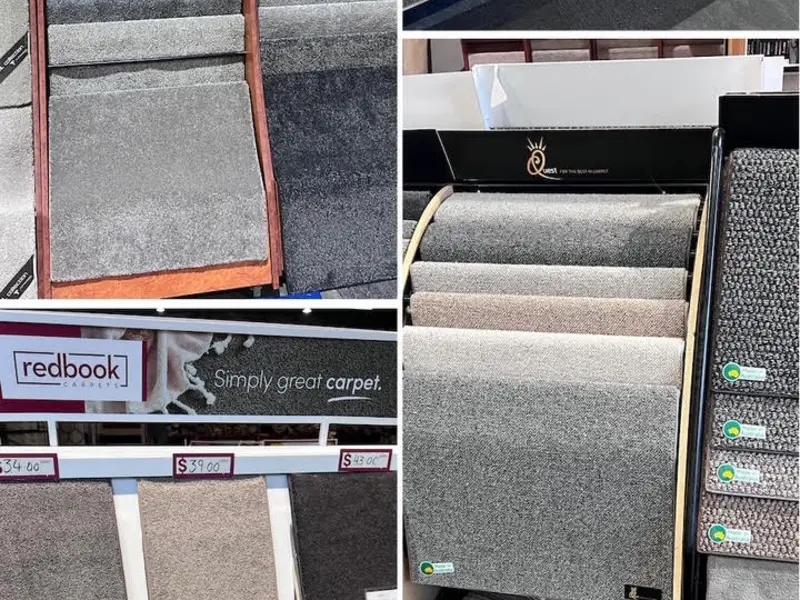
Both. We can supply quality carpet at fair prices and install it, or if you have already bought your own carpet we will lay it for you.
How do I choose the right carpet for a room?
Start with how the room is used. Hallways, stairs and living areas need something hard-wearing. Bedrooms can go softer. Pets, kids and light colours all make a difference too. Tell us about the room when you ask for a quote and we will point you in the right direction.
Does underlay really matter?
Yes. Underlay cushions the carpet, helps it wear more evenly and adds comfort and some sound and heat insulation underfoot. A good carpet on poor underlay will not feel or last as well as it should.
Density matters as much as thickness. A thick but spongy underlay can feel nice at first and then break down. For most homes a firm underlay of around 8 to 10mm works well, and stairs and hallways suit something firmer still.
How long should carpet last?
It depends on the quality, how much traffic it gets and how well it is looked after. A well-chosen carpet in a normal home often lasts 10 to 15 years or more. Regular vacuuming and cleaning up spills quickly makes a real difference.
Wool or synthetic carpet: which is better?
Neither is better for everyone.
Wool is a natural fibre. It feels great underfoot, springs back well and usually costs more.
Synthetic carpets such as nylon and polyester are usually more affordable and come in a huge range of styles. Nylon handles heavy traffic well. Polyester is soft and resists stains but can flatten sooner in busy spots.
The right choice depends on the room, your household and your budget. Ask us and we will help you narrow it down.
What is the best carpet for homes with pets and kids?
Look for a tight, dense carpet that is easy to keep clean. A few tips:
- A synthetic carpet with stain resistance is a practical pick.
- Cats can snag loop pile with their claws, so a cut pile is often safer.
- A mid-tone or flecked colour hides marks better than plain light colours.
- Good underlay helps the carpet hold up.
Tell us about your household when you ask for a quote and we will suggest some options.
Can new carpet go over old carpet?
No. The old carpet and underlay should come up first.
Laying new carpet over old leaves a soft, uneven base. The new carpet will not stretch properly, and ripples and early wear usually follow. A clean, firm floor underneath gives the best result.
Should I keep the offcuts from my job?
Yes, please. Leftover carpet from your job is the best match for future repairs, because it comes from the same roll.
Store it somewhere dry, flat or rolled, and out of direct sun. If a burn, stain or damaged patch turns up later, we can use it to make the repair.
Repairs & restretching
What is carpet restretching?
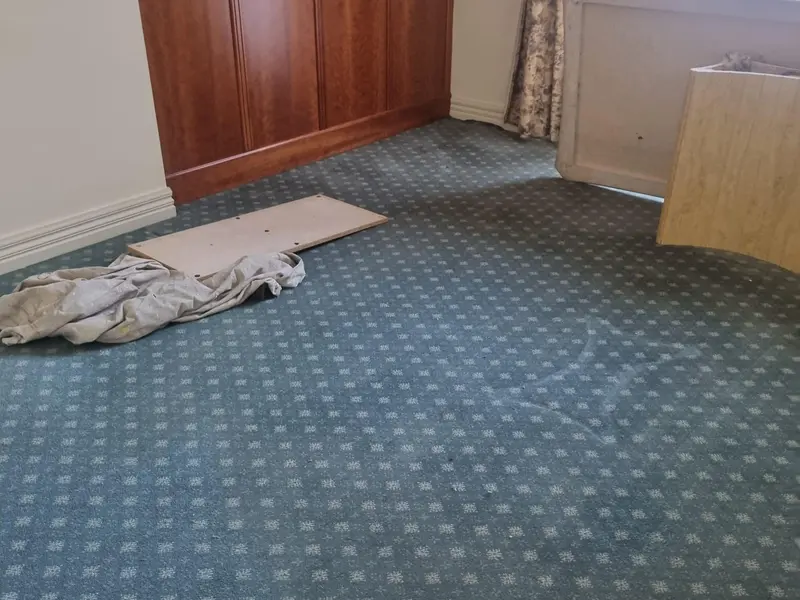
Over time carpet can loosen from its edges and form ripples or bumps. Restretching pulls it tight again and re-fixes it, so it lies flat. It also removes a trip hazard and stops the loose areas wearing out faster.
Is restretching or repairing cheaper than replacing the carpet?
Usually, yes. Most carpet problems can be fixed for a fraction of the cost of replacing the whole room. If the carpet is too worn out to be worth saving, we will tell you.
Can burns, holes and pet damage be repaired?
Often, yes. The damaged piece is cut out and a matching piece goes in, taken from a spare offcut or a hidden spot like the inside of a cupboard. How hard it is to see afterwards depends on the carpet and how well it matches. Send us a photo and we will give you an honest view.
Why does my carpet have ripples?
The usual causes are carpet that has loosened with age, humidity or moisture, heavy furniture being dragged across it, or a poor stretch when it was first laid. Ripples tend to get worse, not better, so it is worth fixing them early.
My carpet seam has come apart. Can it be fixed?
Usually, yes. A seam that has lifted or split can be trimmed back and re-joined with seam tape and adhesive.
Until we get there, do not pull on any loose threads. If a few stand up from the surface, snip them level with the carpet. If the carpet is fraying right along the seam, send us a photo so we can tell you what is needed.
Stairs
Do you carpet stairs?
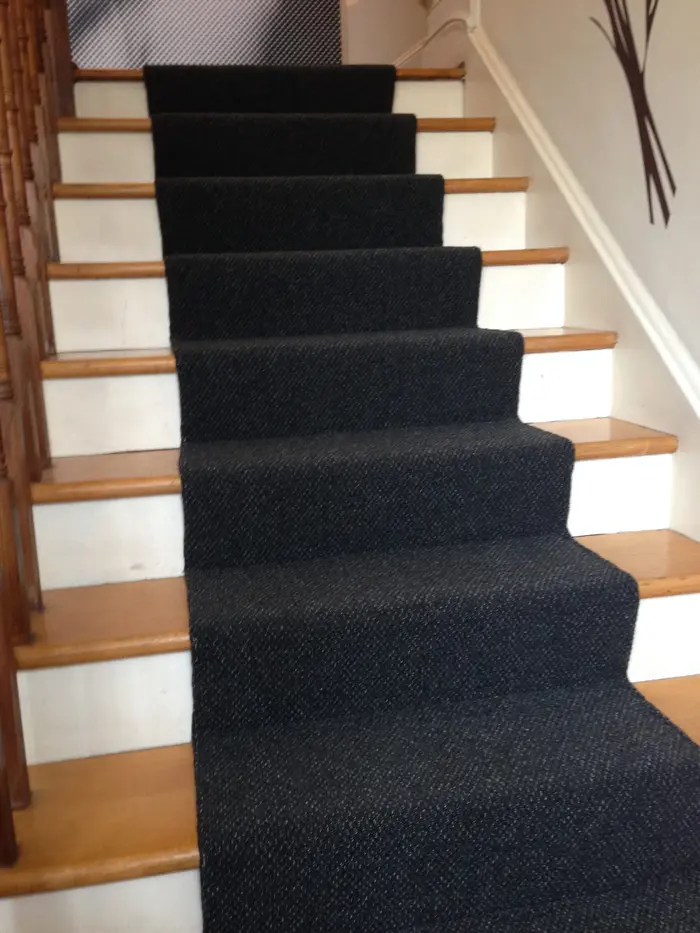
Yes, stairs are our specialty. Tight tucks, neat edges and clean lines make a big difference to how an entrance looks. Tricky stairs are welcome.
Why does carpet on stairs cost more per square metre than a room?
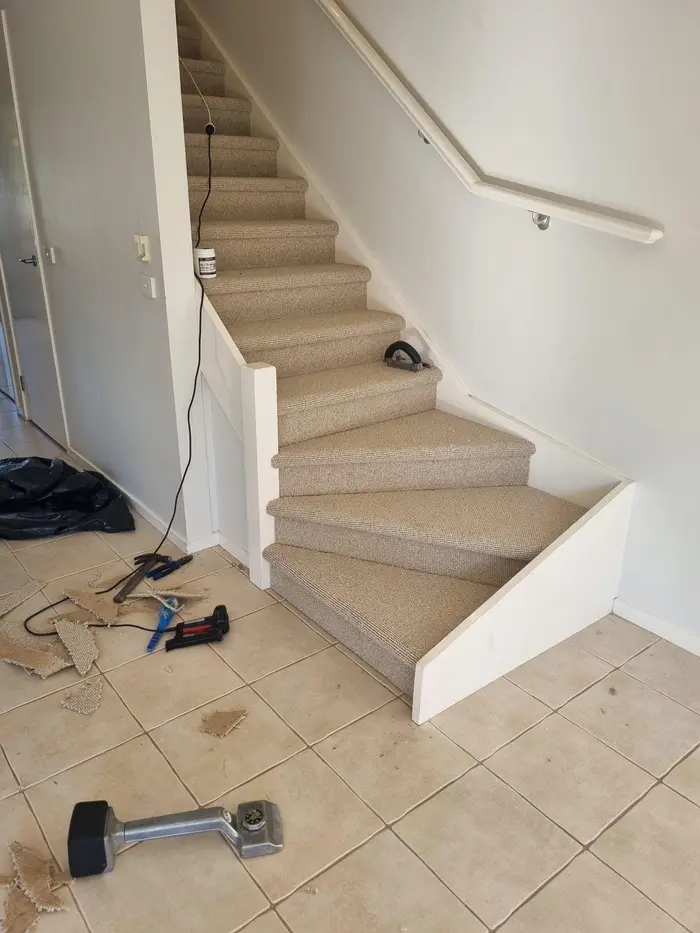
Every step is cut, fitted and tucked by hand, and the edges are on show, so there is no room for sloppy work. It is slower and more skilled than laying a flat room.
What is the best carpet for stairs?
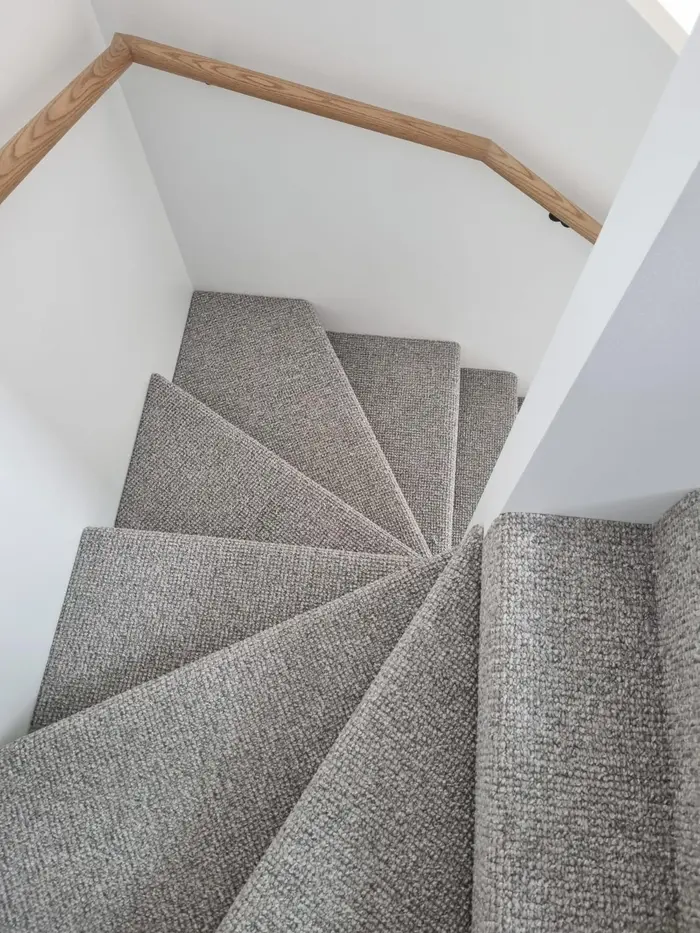
Something firm, dense and hard-wearing. Stairs take more wear than any room, and the front edge of every step takes the weight.
- A shorter pile or a tight loop holds its shape better than a soft, deep pile.
- A firm underlay helps the edge of each step last.
- Mottled or darker colours hide wear better than plain light ones.
Curved and winding stairs can be carpeted too, as long as the carpet is flexible enough to follow the curve.
Carpet tiles & commercial
Do you do commercial jobs?
Yes. We supply and fit commercial carpet and carpet tiles for offices, retail spaces, rentals between tenants and strata common areas, and we work to keep disruption to your business low.
Why choose carpet tiles?
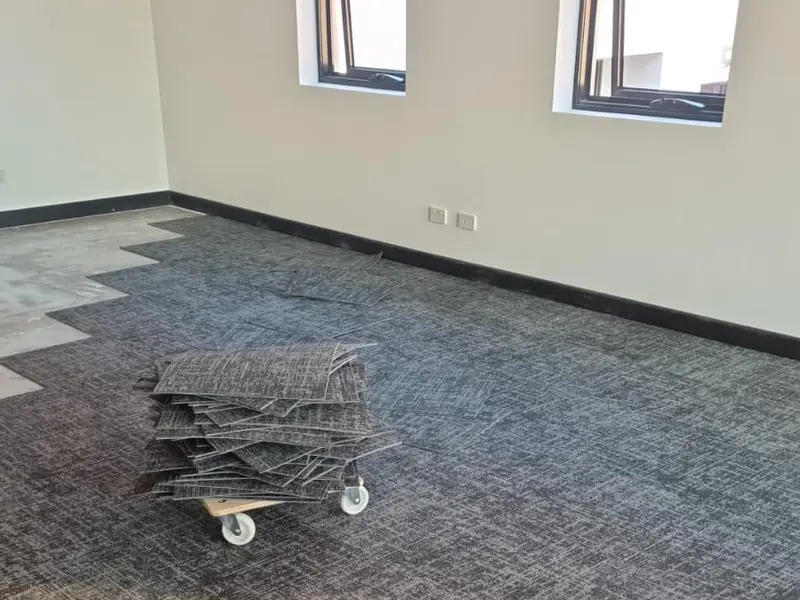
They are hard-wearing and practical, which makes them a good fit for offices, rentals, garages and high-traffic areas. If one tile gets damaged or stained, it can be swapped out without replacing the whole floor.
Can carpet tiles go over an existing floor?
Often, yes, as long as the floor underneath is clean, dry, flat and firm. Concrete, timber and many hard floors work well.
A floor that is damp, bumpy or crumbling needs sorting out first, or the tiles will not sit properly. Send us a photo or ask us to take a look.
Before & after your job
How should I prepare for the job?
Getting the room ready is mostly about clearing the way so we can work safely and get straight to it.
- Clear small items, breakables and anything fragile out of the room.
- Empty shelves, cupboards and drawers that sit on the carpet if you can.
- Tell us about any large or heavy furniture when you ask for your quote, so we can plan for it.
- Lift or tie up anything that hangs to the floor, like long curtains.
- Keep pets and young kids out of the work area, and let us know if parking is tricky.
Is it normal for new carpet to shed fluff?
Yes. New carpet sheds loose fibres for the first few weeks. Vacuum regularly and it settles down. Opening windows for a while also helps clear the new carpet smell.
Will I be able to see the seams?
A well-made seam should be hard to spot. If a room is wider than the carpet roll, a join is needed, and we plan where it goes so it sits away from the main light and out of the busiest walkways.
The pile is matched so it runs the same way on both sides. Some carpets show a seam more than others. A plain, light colour will show it more than a patterned or flecked carpet. We are happy to show you where the seams will fall before we start.
How soon can I use the room and put the furniture back?
Carpet that is stretched in over gripper strips can usually be walked on as soon as we finish. If any glue or seam adhesive is involved, or you have a special style of carpet, we will tell you how long to wait before putting heavy furniture back. Ask us on the day, because it depends on the carpet and how it is fixed.
How-to guides
How do I measure a room for carpet?
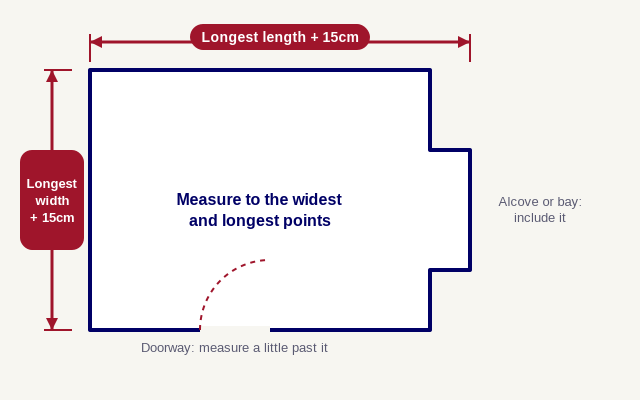
You do not need to be exact, because we measure again before we order anything. But a good estimate helps with a quote.
- Sketch each room from above and mark doorways, alcoves, cupboards and bay windows.
- Measure the longest length and the widest width of the room. Measure to the furthest points, even if the room is not a perfect rectangle.
- Add about 15cm to each measurement. This allows for trimming and wastage.
- Measure a little past each doorway, to the middle of the door, so the carpet carries through neatly.
- For stairs, measure the riser (the upright part), the tread (the flat part) and add about 5cm for each step. Count the number of steps.
- Rolls of broadloom carpet are usually around 3.6 to 4 metres wide. A room wider than that needs a join.
- Send us your sizes with a few photos and we will take it from there.
How do I know if my carpet needs restretching?
Look for these signs:
- Ripples or waves in the carpet, especially in the middle of the room.
- Carpet that has pulled away from the wall or the edge strip.
- A bump that moves when you push it with your foot.
- Loose carpet at doorways or at the top and bottom of stairs.
A quick test: press your palm flat on the carpet and push gently across it. If the carpet moves in a wave, it has loosened.
If you see any of these signs, send us a photo. Loose carpet wears out faster and can be a trip hazard, so it is worth fixing early.
How can I check that a carpet job has been done well?
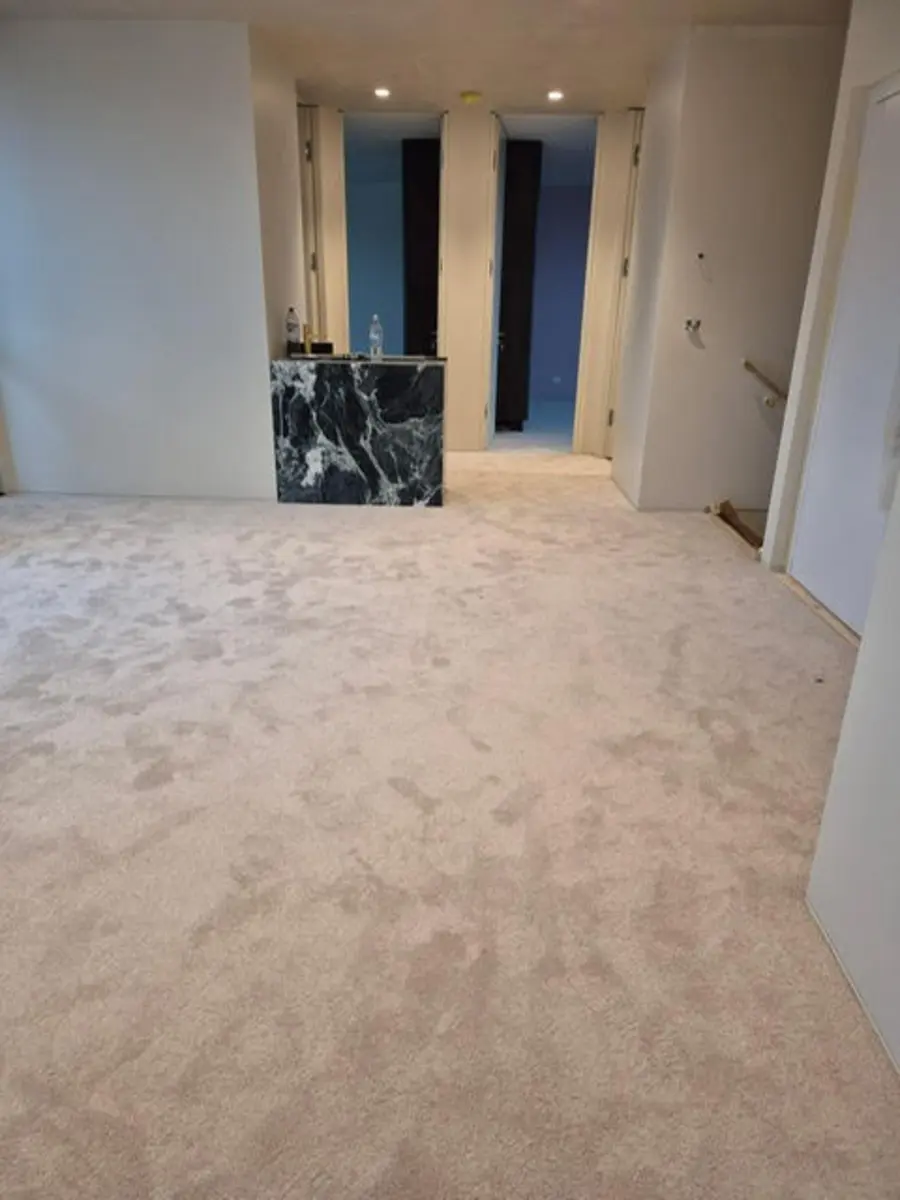
Walk through the finished room in good daylight and check these things.
- Look across the floor for ripples, bumps or loose patches.
- Check the edges along the walls. The carpet should be tight, neatly trimmed, and tucked in without gaps or frayed ends.
- Look at the direction of the pile. It should run the same way across the room and through the house.
- Run a hand over the seams. They should feel flat, with no gap or raised edge.
- Check doorways. The carpet should finish neatly at a trim, with no loose edges.
- On stairs, check that each step is tight and the edges are straight, with no ripples at the front of the tread.
- Tell us about anything you are not happy with before we pack up.
Looking after your carpet
How do I clean up a fresh spill?
The sooner you start, the better the result.
- Blot the spill with a clean white cloth or paper towel. Work from the outside of the spill towards the middle. Do not rub, because rubbing pushes it deeper and can damage the pile.
- Mix a little dish liquid into warm water and dab it on gently, then blot again.
- For coffee, tea or wine, dab on a little white vinegar, then rinse with plain water.
- Press a dry towel on the spot until no more moisture comes up.
- Let it air dry and then vacuum the area.
Do not use bleach or hot water, and do not soak the carpet. Test any product on a hidden spot first, and check the care label if your carpet is wool.
How do I deal with pet urine on carpet?
Act as soon as you find it.
- Wear gloves. Blot up as much as you can with paper towels. Press down, do not rub.
- Dab on a little white vinegar mixed with water and blot again.
- Apply an enzyme pet stain remover and follow the label. Enzyme cleaners break down the smell, which stops pets going back to the same spot.
- Let it air dry. Do not use heat, because heat can set the stain.
Avoid cleaners with ammonia in them, because the smell can attract pets back. If the smell keeps coming back, the urine may have soaked through to the underlay. Give us a call and we can look at whether it needs replacing.
How do I get furniture dents out of carpet?
Dents from heavy furniture usually come out with a little work.
- Move the furniture away.
- Dab a few drops of warm water onto the dent, or hold a damp cloth over it.
- Fluff the pile up with your fingers or the back of a spoon.
- Let it dry, then vacuum.
To prevent dents, put furniture cups under heavy legs, and move pieces a little every so often so they do not sit in the exact same place.
How do I look after new carpet in the first few weeks?
A few habits at the start help the carpet settle in and look good for longer.
- Vacuum lightly and often to pick up the loose fibres. This is normal for new carpet and it settles down.
- Open windows and doors to air the room, which clears the new carpet smell.
- Put mats at outside doors so grit does not get walked in.
- Use felt pads or sliders under furniture, and lift rather than drag.
- Ask us before you book a professional clean, so it is done the right way for your carpet.
What should I do if my carpet gets wet?
Act quickly, because damp carpet and underlay can lead to mould and smells.
- Stop the source of the water if you can.
- Soak up as much as you can with towels, or use a wet vacuum.
- Lift furniture off the carpet and put foil or small blocks under the legs.
- Get air moving with open windows, fans and a dehumidifier if you have one.
- Check it after a day. If it is still damp or starting to smell, call us.
If the water came from a flood or a sewage leak, do not try to clean it yourself. The carpet and underlay will usually need to be removed.
Why do some patches of my carpet look darker or lighter?
This is usually shading, not a fault or a stain. The carpet pile leans in different directions, and each direction reflects light differently. It often shows up after vacuuming or where people walk a lot, and it can come and go.
Brushing or vacuuming the pile in one direction can help even it out. If a patch is lighter on one side of the room where the sun comes in, that is likely sun fading. Blinds or curtains during the brightest part of the day can slow it down.
Nothing matches that search. Ask us below and we will answer it.
Still wondering?
Ask Fadel a question
Send your question and we will answer it. Good ones get added to this page so the next person can find the answer too. Your email is only used to reply and is never shown.
Need a price rather than an answer? Get a free quote or call 0423 760 080.